
Introduction
Your travel habits haven't changed. Your income hasn't changed. Yet your timeshare maintenance fee keeps climbing anyway.
That's not unusual. Maintenance fees typically run about $1,000 to $1,500+ a year, and they rise almost annually regardless of how often an owner actually uses the property.
According to ARDA's 2026 industry report, the national average maintenance fee reached $1,550 in 2025, up 4.7% from 2024.
These increases usually trace back to resort budgeting decisions, not a single line item. This article walks through what actually drives the increases, warning signs to watch for, and how to respond if the numbers no longer make sense for you.
This is educational information for US timeshare owners. It doesn't replace a careful read of your ownership agreement or advice from a qualified attorney about your specific situation.
Key Takeaways
- Maintenance fees fund upkeep, staffing, utilities, insurance, taxes, and reserve accounts
- Inflation, insurance costs, aging infrastructure, and thin reserves drive most yearly increases
- A special assessment is a separate, often sudden bill, not your regular annual fee
- Verify your bill, request documentation, and contact the resort before delinquency
- If ownership no longer fits, research legitimate resort exits or vetted support before stopping payments
Common Causes of Rising Timeshare Maintenance Fees
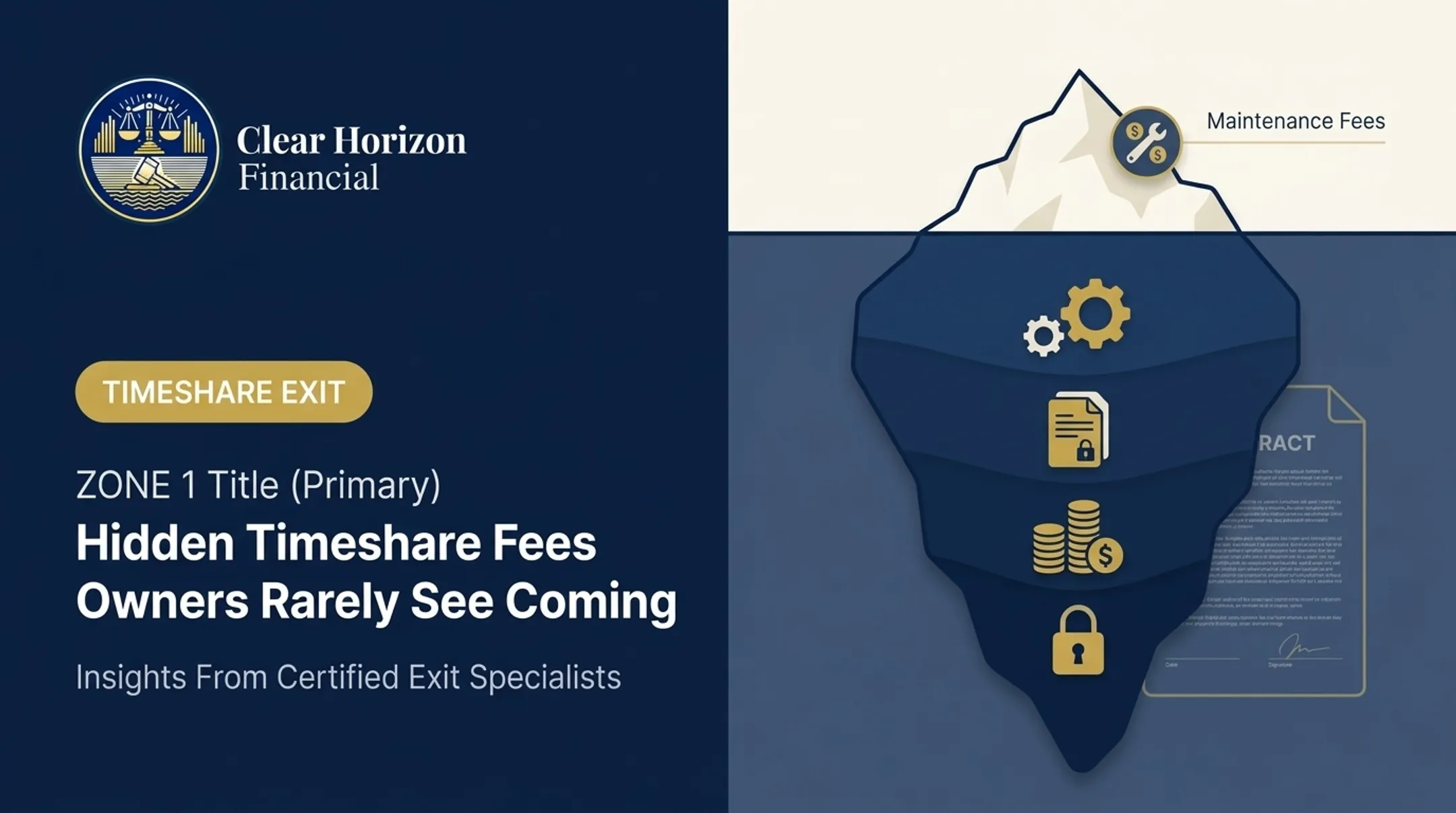
A timeshare maintenance fee is a recurring charge split among owners to operate and maintain the resort. It covers everything from pool cleaning to roof repairs. Because the resort's expenses continue whether or not you show up, the fee obligation typically continues too. Usage has nothing to do with it.
Your specific amount depends on:
- Unit size and ownership interest (fixed week, floating week, or points)
- Season and demand level
- Resort location and amenity package
- The association's fee-allocation formula
Inflation and Rising Operating Costs
Resorts pay for wages, utilities, landscaping, housekeeping, and administrative services just like any other property. When those costs rise, the annual operating budget rises with them.
US private-industry compensation costs climbed 3.3% over the year ending June 2026, according to Bureau of Labor Statistics data. Over the same period, the consumer price index rose 3.4%, with electricity costs up 3.8%. Those are national economic indicators, not a specific resort's cost sheet, but they explain the broad pressure feeding into most budgets.
Insurance, Taxes, and Location-Related Expenses
Coastal and storm-exposed resorts often face different cost pressures than inland properties. Property insurance premiums, disaster coverage, and local tax rates all factor into an association's budget.
Community associations nationwide have felt this squeeze. In a 2025 Community Associations Institute survey, 91% of respondents reported insurance premium increases, and 17% saw increases exceeding 100%. That's association-wide data, not a timeshare-specific figure, but it illustrates how sharply insurance costs can move in high-risk areas.
Aging Properties and Deferred Maintenance
Roofs, plumbing, HVAC systems, elevators, and pools don't last forever. About 30% of US timeshare communities opened in 1985 or earlier, according to ARDA, meaning a meaningful share of the industry is managing older infrastructure.
Reserve funds exist to cover these big-ticket replacements without shocking owners. When reserves are underfunded, resorts have two choices: raise regular fees to catch up, or issue a special assessment when a project can't wait. A 2025 CAI Foundation survey found 30% of associations had reserves funded below 50%, with 25% flagging special-assessment concerns.

Management Decisions, Amenities, and Capital Projects
Resorts with larger grounds, more amenities, and bigger staffs simply cost more to run. Major renovations and capital projects often show up as higher regular fees or special assessments.
Where documents are available, owners can review:
- Proposed annual budgets
- Reserve studies
- Board or association meeting notices
- Itemized management expenditures
Delinquent Owners and Revenue Shortfalls
When some owners stop paying, the resort's budget still needs to balance. ARDA reports approximately 93% of maintenance-fee accounts were current in 2025 (defined as 30 days delinquent or less), meaning roughly 7% were not. That figure shouldn't be read as a national default rate.
Delinquency isn't always shifted onto other owners automatically. Some states handle it differently. North Carolina law, for example, allows developers to guarantee assessment levels during a defined period, meaning the developer, not other owners, covers the shortfall in that arrangement. Rules like this vary by state and by contract, so check your governing documents.
What Happens If Rising Fees Are Ignored
Fees don't disappear because you stop using the property. Skipping payment usually triggers consequences, though the exact process depends on your contract and state law.
Common outcomes include:
- Late charges and interest on the unpaid balance
- Loss of booking or reservation rights
- Referral to a collections agency
- A lien placed on the timeshare interest
- Foreclosure proceedings
Florida law, for instance, permits the managing entity to pursue judicial foreclosure, a money judgment, or a trustee-foreclosure process once a lien attaches. That enforcement risk is why the FTC's consumer guidance warns that any company telling you to simply stop paying fees is a red flag worth taking seriously.

An unpaid maintenance-fee balance is different from an unpaid timeshare loan balance. Developer financing often carries interest rates of 14% to 18%, and defaulting on either obligation can create separate financial consequences, including possible tax implications.
Get written information from the resort, and talk to a qualified professional before assuming you know how your specific contract works.
Warning Signs You're About to Face a Larger Timeshare Bill
Some increases arrive with notice. Others catch owners off guard. Watch for:
Resort-side signals:
- A proposed budget increase in your annual notice
- Reduced reserve-fund contributions
- Announced renovations or capital projects
- Insurance policy changes mentioned in owner communications
- A new special assessment notice
Signals in your own records:
- Repeated year-over-year increases with no explanation
- Unfamiliar or duplicated line items
- Billing discrepancies between years
- A rising delinquency rate mentioned in resort disclosures
If you're unsure what's driving an increase, request these records from the managing entity:
- Annual budget
- Assessment history
- Reserve fund position
- Fee-allocation method
- Written explanation for any material change
Florida's timeshare statute, for example, requires the managing entity to provide an itemized annual budget and make records reasonably available to owners on request.
How to Respond to Rising Timeshare Maintenance Fees
Think of this as a sequence: verify the bill, request details and relief options, weigh cost offsets, then decide whether ownership still fits and what exit paths remain if it does not.

Review the Bill and Ownership Documents
Compare your current statement against prior years. Confirm these details match what you expect:
- Unit or points owned
- Due date, taxes, and assessments
- Exchange fees and late charges
- Anything unfamiliar or duplicated
Then pull your original contract and look for language on fee increases, assessments, payment plans, surrender or transfer rights, and resale restrictions. If the wording is unclear, that's a good reason to get a professional read on it rather than guess.
Ask the Resort or Association for Specific Information
Request, in writing:
- A breakdown of the increase
- The approved annual budget
- The reserve fund's current position
- Any hardship, installment, surrender, or deed-back programs available
Contact the resort before your account becomes delinquent, not after. Keep every email, notice, payment record, and the name of anyone you speak with.
Consider Ways to Offset Costs, Cautiously
Renting your week or points can help some owners, but it's not automatic income. Demand, resort rules, platform fees, and booking restrictions all cut into what you actually keep. Calculate your realistic net proceeds, not a hoped-for profit, before counting on it.
Also factor in exchange fees, reservation charges, and transfer costs. These can push your total annual cost well above the maintenance fee alone.
Evaluate Whether Ownership Still Makes Sense
A timeshare is a use-based purchase, not a guaranteed investment. Weigh your full annual cost against how often you actually travel there and what comparable trips would cost elsewhere.
Ask yourself:
- Can I comfortably afford this fee if it rises again next year?
- Am I using the property enough to justify the cost?
- Has this resort issued special assessments before?
- Would I want to pass this obligation to my heirs?
- What are my realistic resale or exit options?
Explore Documented Ownership-Ending Options
Depending on your circumstances, a few routes may apply:
- Rescission: a short cancellation window (often 3 to 15 days depending on state law) for very recent purchases
- Resort surrender or deed-back program: typically requires being current on fees with no outstanding loan balance
- Transfer or resale: properly documented and completed through legitimate channels
- Professionally reviewed cancellation: for cases involving misrepresentation or contract issues
Some owners work with firms that focus specifically on documentation and formal filings. Clear Horizon Financial, for example, reviews contracts and deeds, supports formal filings and resort communications, and assigns dedicated case management with written terms provided upfront.
If you look into any provider, independently verify their credentials, understand every fee in writing, and never stop paying based on a guarantee you haven't fully confirmed.
Tips for Long-Term Prevention and Control
A few steady habits can keep rising maintenance fees from catching you off guard.
- Review your paperwork yearly — annual statement, budget notice, assessment history, and contract terms
- Track total ownership cost, not just the maintenance fee — financing, taxes, exchange charges, and travel expenses all count
- Participate in owner communications — attend permitted meetings, ask budget questions, keep copies of votes and notices
- Screen any exit assistance carefully — verify the business independently, be wary of pressure tactics or guarantees that sound too good to be true, and get every fee in writing
- Reassess after major life changes — retirement, illness, reduced travel, or an inherited timeshare are all reasons to revisit whether ownership still fits
Conclusion
Rising timeshare maintenance fees rarely come from one cause. Operating costs, insurance, aging buildings, reserve funding, capital projects, and owner delinquencies all interact to shape your annual bill.
You can't control the resort's budget. You can still take practical steps:
- Review the numbers and request documentation
- Address billing errors when you find them
- Ask about relief programs the resort may offer
- Decide whether ownership still works for you
Don't ignore the bill, and don't take an unverified exit promise at face value. A careful review of your contract and the resort's written documentation is the safer place to start.
Frequently Asked Questions
What is the average yearly maintenance fee for a timeshare?
The 2026 ARDA industry report puts the US average at $1,550 per interval for 2025, including reserve contributions but excluding taxes and special assessments. Your actual fee depends on your resort, unit size, and ownership structure.
Are timeshares worth it in 2026?
It depends on how often you actually use it, your total ownership costs, and fee-increase history. A timeshare is a vacation-use commitment, not an appreciating investment, so evaluate it against real usage rather than resale hopes.
Why do timeshare maintenance fees keep increasing every year?
Inflation, labor, utilities, insurance, property taxes, aging buildings, and reserve funding all push fees up. Renovations and owner delinquencies can add more pressure, and most yearly hikes reflect several of these at once.
What happens if I stop paying my timeshare maintenance fees?
Nonpayment can lead to late fees, collections, loss of use, a lien, and potentially foreclosure, depending on your contract and state law. Contact the resort and review your options before missing payments.
Can I reduce or negotiate my timeshare maintenance fees?
You generally can't set your own fee, but you can flag billing errors, ask about hardship or installment programs, participate in owner governance, and review disclosures for ways to offset costs.
How can I legally stop paying rising timeshare maintenance fees?
Fees typically stop only once your ownership obligation legally ends: through rescission, an approved surrender or deed-back, a completed transfer, resale, or a properly reviewed cancellation. Simply not paying doesn't end the contract on its own.