
Introduction
Inheriting a timeshare often means inheriting its bills, too. Maintenance fees typically run $1,000 to $1,500 a year and climb 3–4% annually.
Many contracts are also written "in perpetuity," so they can bind heirs to those fees indefinitely unless the interest is formally disclaimed or exited.
Here's the part most people don't realize: you're not required to accept it.
This guide is for U.S. heirs, beneficiaries, and executors who want to refuse a timeshare inheritance without accidentally accepting ownership first. We'll walk through identifying the interest, avoiding actions that count as acceptance, confirming your deadline, and filing a proper written disclaimer.
A quick note before you continue: inheritance, probate, tax, and disclaimer laws vary significantly by state. This article is for general information only and isn't a substitute for advice from a licensed attorney in your state.
Key Takeaways
- Refusing an inheritance requires a formal written disclaimer, not silence or a missed payment
- Using, renting, or transferring the timeshare before disclaiming can void that right entirely
- Deadlines and filing rules differ by state — verify yours with the probate court or an estate attorney
- A disclaimer redirects the interest to another beneficiary; it doesn't erase the timeshare itself
- Deed-back, cancellation, or professional exit support may help when disclaiming isn't an option
What It Means to Refuse an Inherited Timeshare
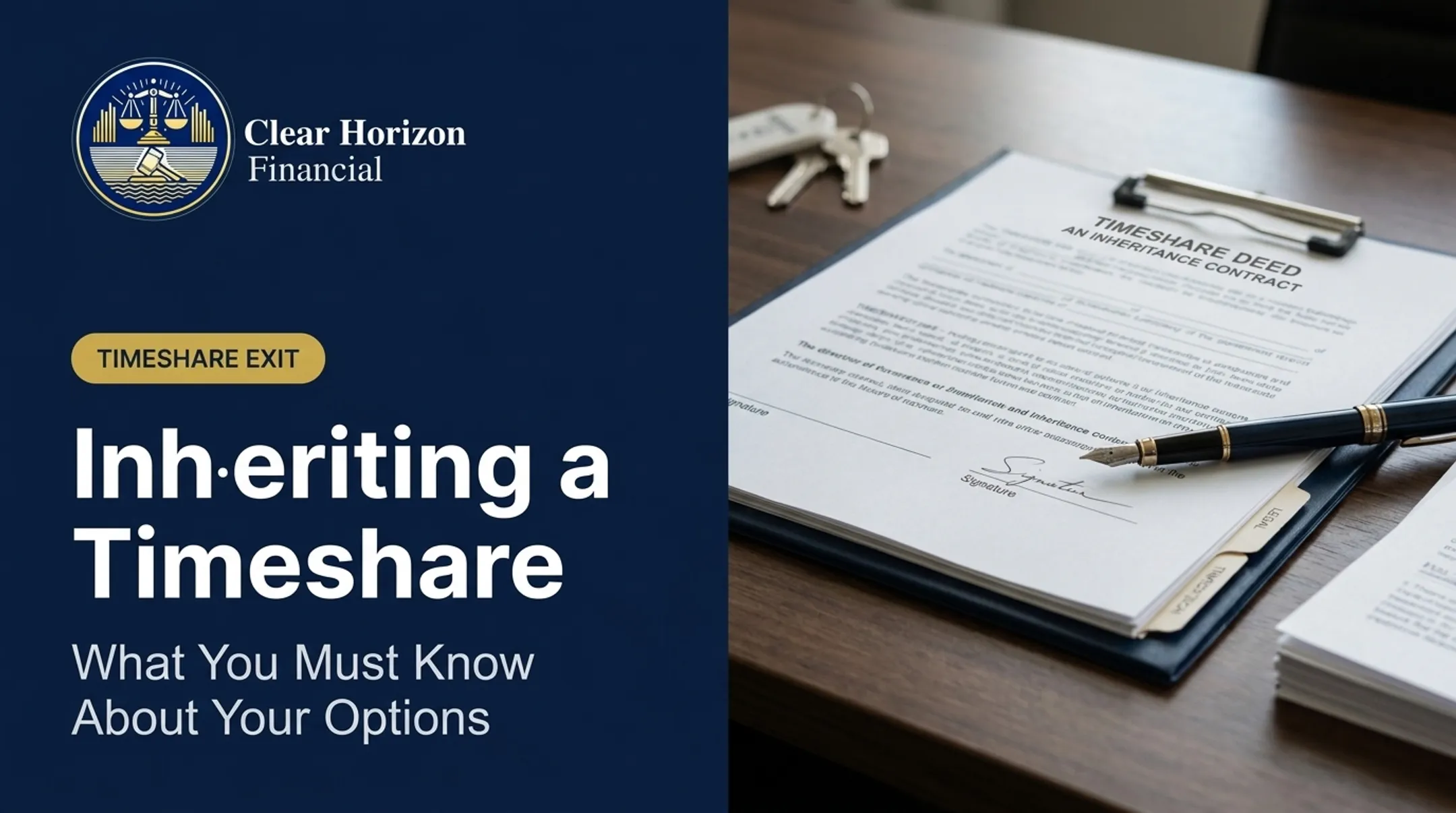
A disclaimer of interest is a formal, written refusal to accept property that would otherwise pass to you. Per Cornell's Legal Information Institute, it is a legal declaration that you decline a right or interest before you have accepted it. Once filed correctly, the law treats you as though you never received the inheritance at all.
That's very different from these actions:
- Ignoring maintenance-fee statements
- Refusing to answer resort phone calls
- Letting an account go to collections
- Transferring the deed to someone else
- "Surrendering" the timeshare informally
None of those constitute a legal disclaimer. They may just create a paper trail suggesting you accepted the property and are now defaulting on it.
Why Ownership Type Matters
Timeshares come in several legal forms, and the form determines how the interest transfers at death:
| Ownership Type | What It Means |
|---|---|
| Deeded timeshare estate | Recorded real property interest; passes like a house through will, trust, or intestacy |
| Right-to-use / contractual | No deed: a contract granting occupancy rights for a set term |
| Vacation club or points-based | Membership interest tied to a club structure, not a land title |
The timeshare may pass to you through a will, a trust, a deed with survivorship language, a beneficiary designation, or your state's intestate succession rules if there was no will. There is no single universal path. Check the actual documents before assuming how the transfer works.
Heirs often refuse the interest because of:
- Ongoing maintenance fees and surprise special assessments
- Limited usable weeks or travel restrictions
- Poor resale prospects (very few timeshares ever resell successfully)
- Existing loan debt on the timeshare
- No desire to continue a relative's vacation commitment
How to Refuse an Inherited Timeshare Step by Step
The process rewards caution. One wrong move, like booking a week at the resort "just to see it one last time," can eliminate your ability to disclaim.
Steps 1-3: Protect Your Position First
Don't use or exercise the timeshare. Don't book a stay, let family use it, rent the week, transfer points, or sign resort paperwork. Accepting a benefit can bar a disclaimer under state law (for example, California's Probate Code). Verify what counts as "acceptance" in your state before you act.
Identify the timeshare and gather records. Pull the core file together:
- Deed or membership agreement, plus purchase and financing paperwork
- Maintenance-fee statements, resort correspondence, and account number
- Will or trust, probate filings, and the death certificate
Keep originals safe and make copies of everything.
Determine who controls the estate. This might be an executor, a personal representative, a trustee, or the probate court itself, depending on how the decedent structured their estate. Find out exactly where in your state a disclaimer must be submitted — this differs by jurisdiction.
Steps 4-7: File the Disclaimer Correctly
Confirm your deadline before drafting anything. Federal tax code Section 2518 sets a nine-month window for federal estate-tax treatment. State rules differ:
- New York: generally nine months from the disposition's effective date
- Florida: disclaiming allowed "at any time unless barred"
- California: reasonable-time standard with a nine-month presumption
Confirm which rule governs your case before you draft.
Prepare a specific written disclaimer. It typically needs your name, a description of the timeshare interest, a clear statement of refusal, your signature, the date, and notarization or witnessing depending on state law. Don't rely on a generic online template — requirements differ enough between states that a mismatched form can be rejected.
Deliver the disclaimer and keep proof. Copies often need to go to the probate court, the executor or trustee, and the resort or homeowners' association. Use certified mail or another traceable method, and hold onto every signed receipt, filing confirmation, and copy you send.
Confirm the result and monitor follow-up. Verify the disclaimer was accepted, find out who receives the interest next, and respond promptly to any further resort or probate correspondence — without accepting any benefits in the meantime.

Quick self-check before you're done:
- Avoided any use or benefit of the timeshare
- Collected all deed, contract, and estate documents
- Confirmed the applicable deadline in writing
- Filed the disclaimer with the correct court or party
- Notified the resort or association
- Kept proof of delivery and filing
What Affects the Process and Common Issues
After You Disclaim: Next Heirs and Open Fees
Once disclaimed, the timeshare typically passes to a contingent beneficiary, another heir, a trust, or back into the general estate, governed by the will, trust, or intestacy law. Each of those parties may then face the exact same decision you just made, independently.
Fees do not vanish with the disclaimer. The FTC notes that a deceased person's valid debts are generally paid from estate assets, not automatically from a relative's own pocket, unless that relative co-signed or state law says otherwise. Unpaid maintenance fees, special assessments, financing, or collection activity can still sit with the estate and delay closing it out.
Disclaimer vs. Cancellation — Not the Same Thing
A disclaimer refuses an inheritance before you've accepted it. Cancellation, deed-back, negotiated surrender, resale, and foreclosure all deal with an existing ownership someone already holds. Mixing these up is where a lot of heirs get stuck.
Two myths to clear up now:
- "I'll just ignore the resort." Silence isn't a disclaimer. It can trigger collections, credit damage, or probate complications instead.
- "The deadline is always nine months." That's a federal tax rule, not a universal state law. Confirm your actual deadline immediately — don't assume.
Watch for Exit Scams
The FTC has repeatedly warned about timeshare exit scams. Treat unsolicited offers that promise instant removal, demand large upfront fees, or tell owners to stop paying as red flags.
One 2024 Alaska case involved nine residents who paid a combined $113,521 to a fraudulent exit operation. Always verify credentials, get written terms, and confirm refund provisions before paying anyone.

Clear Horizon Financial may become relevant only after the disclaimer question is settled. Our team reviews existing timeshare contracts and deeds, handles resort communications and formal filings, and shares case updates through a private client portal.
We're not a law firm and can't decide whether a disclaimer is legally valid. That determination belongs with probate or estate counsel.
When a Disclaimer May Not Be the Right Solution
Some situations call for immediate legal guidance instead of a DIY disclaimer:
- You've already used the timeshare or received any benefit from it
- You missed the applicable deadline
- Documents were signed transferring the interest into your name
- Multiple heirs disagree about how to proceed
- Creditor claims, tax questions, or an active probate dispute are involved
- The ownership documents themselves are unclear
If the original owner is still living, a different path applies. Contact the resort about an official take-back or deed-back program, update estate-planning documents, or pursue a documented lifetime exit before the timeshare reaches an heir.
If you've already accepted the interest, a disclaimer is usually off the table. The next move is more likely resort surrender, contract cancellation review, negotiated resolution, or transfer.

Weigh every option against:
- Written eligibility requirements
- Total cost to you and the estate
- Effect on other heirs and estate administration
- Whether the resort will give written confirmation that the obligation ended
Clear Horizon Financial helps heirs and owners who already hold an unwanted timeshare review exit paths, including cancellation and surrender options, when a disclaimer no longer applies.
Conclusion
Refusing an inherited timeshare comes down to five moves:
- Avoid using the timeshare
- Identify exactly what you've inherited
- Verify your deadline and state requirements
- File a proper written disclaimer
- Confirm what happens to the interest afterward
Disclaiming does not make the timeshare vanish. The estate, or whichever beneficiary receives it next, still has to deal with the ownership and any outstanding fees.
Act quickly, keep every document, and stay away from any exit company that demands a big upfront payment before doing verifiable work. When in doubt, talk to a qualified probate attorney before you act.
If a disclaimer isn't available or no longer fits your situation, Clear Horizon Financial offers a free deed and contract review to help evaluate what options might remain, without promising a legal outcome we can't guarantee.
Frequently Asked Questions
How can I legally refuse to inherit a timeshare?
You generally need to complete a formal written disclaimer that meets your state's probate requirements. Avoid using, renting, or benefiting from the timeshare beforehand, since that can eliminate your ability to disclaim.
What is the time limit for disclaiming inheritance?
It depends entirely on your state and the specific circumstances involved: there's no single universal deadline. Verify the applicable timeframe immediately with your probate court or a qualified estate attorney.
When should I disclaim an inheritance?
Consider disclaiming before you use the timeshare, accept any benefit from it, transfer it, or let your deadline pass. Review how it affects successor beneficiaries and the estate first.
How do I get rid of a timeshare I inherited?
If you haven't accepted the interest yet, a disclaimer may work. If you already have, look into deed-back, negotiated cancellation, transfer, or resale, whichever the resort's contract actually permits.