
Before you sign anything or send a deposit, you need real answers, not a sales pitch. The right questions reveal how a company actually operates: its experience with your specific resort and contract, its fee structure, its timeline, and what "success" really means on paper.
The stakes are real. Average maintenance fees run $1,800 to $3,200 a year and climb 4% to 6% annually with no cap, and many contracts bind owners "in perpetuity," meaning the obligation can pass to heirs. Over a lifetime, total fees can reach $80,000 to $200,000 or more.
The FTC advises searching a company's name alongside "scam" or "complaint," reviewing every document yourself, and getting all promises in writing before paying anyone (FTC, 2022). Here's exactly what to ask.
Key Takeaways
- A trustworthy exit company puts its process, fees, timeline, and definition of success in writing before you sign anything.
- Ask about direct experience with your resort, contract type, loan status, and specific reason for exiting.
- Guaranteed outcomes, 24-to-48-hour pressure, and vague refund terms are red flags, not reassurance.
- Your case isn't finished until you hold written proof of exactly what obligation ended and who confirmed it.
What Is a Timeshare Exit Company?
A timeshare exit company is a third-party business that helps owners evaluate and pursue options for ending or resolving a timeshare obligation. Services and legal authority vary widely between providers.
Owners typically arrive at these companies from very different starting points:
- A paid-off contract with no remaining loan balance
- An outstanding mortgage or maintenance-fee loan
- Delinquent maintenance fees already in collections
- An inherited timeshare nobody in the family wants
- A purchase the owner believes was misrepresented at the sales presentation
Each situation changes what's actually possible.
An exit company is not automatically a law firm. The American Resort Development Association draws a clear line between a non-lawyer exit company and someone authorized to give legal advice. Branding a service "legal" does not make it so (ARDA, 2022). If a representative implies attorney-level authority, ask whether licensed attorneys are involved and how.
How the Exit Process May Work
Most legitimate providers follow a similar sequence, though details differ by company:
- Initial consultation to gather contract, deed, and payment details
- Contract and deed review to identify available options
- Path identification — cancellation, negotiated release, deed transfer, or another route
- Preparation of filings, letters, or regulatory complaints
- Communication and escalation with the resort or lender
- Final documentation confirming the outcome
The resort, lender, association, contract terms, and your payment status all affect which path applies and how long it takes. Ask the company to distinguish between administrative assistance, negotiation, regulatory complaints, deed work, and actual legal representation. These aren't interchangeable, and you should know exactly what you're paying for.

Why Documentation Matters
A completed exit should end with written confirmation that:
- Names the resort or entity
- Describes the obligation resolved
- States an effective date
- Lists any remaining responsibilities
A letter, complaint, deed transfer, stopped payment, or foreclosure does not automatically clear every obligation. Stopping payments can trigger collections or an unplanned foreclosure, and a loan or association debt may still remain. Written documentation is the only proof that closes the loop.
What to Consider When Choosing the Best Timeshare Exit Company
Treat this as a checklist, not a formality. Testimonials and money-back promises sound good on a sales call, but they don't tell you what will happen to your specific contract. Get the following answers in writing before you sign.
What Exactly Will You Do for My Timeshare?
Ask the company to spell out:
- The specific services it will perform and which parties it will contact
- The documents it will prepare, from letters to filings to deed paperwork
- What actions you're expected to take, and when
- Who is actually pursuing the outcome (employees, attorneys, or third parties) and who's accountable
Get a written explanation of the outcome being pursued, whether that's cancellation, a negotiated release, or a deed-back. Just as important, ask what's not included.
Do You Have Experience With My Resort and Contract Situation?
Prior experience with your specific resort brand, points-based or week-based structure, and governing state matters. Ask:
- Has the company handled cases with a mortgage or delinquent fees like yours?
- Can it describe the type of documentation it obtained in comparable cases, without revealing another client's private details?
- Has it handled an alleged-misrepresentation claim similar to yours?
Experience with a resort helps, but it's not a guarantee. A competent provider still reviews your individual contract before making promises.
How Do You Define and Document Success?
This is the question most owners skip, and it's the one that matters most. Require a plain-language definition of "success", and make sure it is not just correspondence sent, payments paused, a foreclosure completed, or a file closed.
Ask specifically:
- What final document will you receive, and who issues it?
- How can you verify that document is authentic?
- Will any maintenance fees, loan balance, taxes, or resale obligations remain afterward?
If a company advertises a success rate, ask how it's calculated, which cases count, over what time period, and whether supporting documentation is available for review. A number without a definition is just marketing.
What Will the Service Cost, and What Happens if the Case Changes?
Request an itemized, written quote covering:
- The initial fee and payment schedule
- Third-party filing or recording charges
- Taxes and optional add-on services
- Any fee that could change later
Ask directly whether the price changes if the company discovers a loan balance, delinquent fees, missing records, a second owner on title, or a more complicated contract than expected. Review cancellation rights, refund conditions, and the exact terms of any money-back guarantee. A guarantee only holds value when its exclusions, deadlines, and enforcement process are spelled out in writing. Also compare the total cost with free or lower-cost options that may already exist through your resort or developer.

How Long Might the Process Take, and What Could Delay It?
Ask for a realistic range based on your specific circumstances, not a universal promised deadline. Common delays include:
- Incomplete or missing documents
- Slow resort response times
- An outstanding mortgage or unpaid maintenance fees
- Multiple owners on the contract
- Regulatory review or deed recording delays
- Disputes over the requested outcome
Timelines vary by case complexity. Treat any fixed, guaranteed date with skepticism until the company has actually reviewed your contract.
How Will You Protect My Interests and Communicate With Me?
Ask the company to put communication and protection terms in writing:
- How often you will receive updates, and who your assigned contact is
- Whether messages and documents live in a client portal you can access, not only scattered emails
- How it handles resort letters, collection notices, lender communications, and requests for personal information
- What happens if it cannot complete the promised service or goes out of business
Do not stop making payments, ignore notices, or change how you communicate with a resort just because a salesperson told you to. Understand the financial and credit consequences first.
Warning Signs to Take Seriously
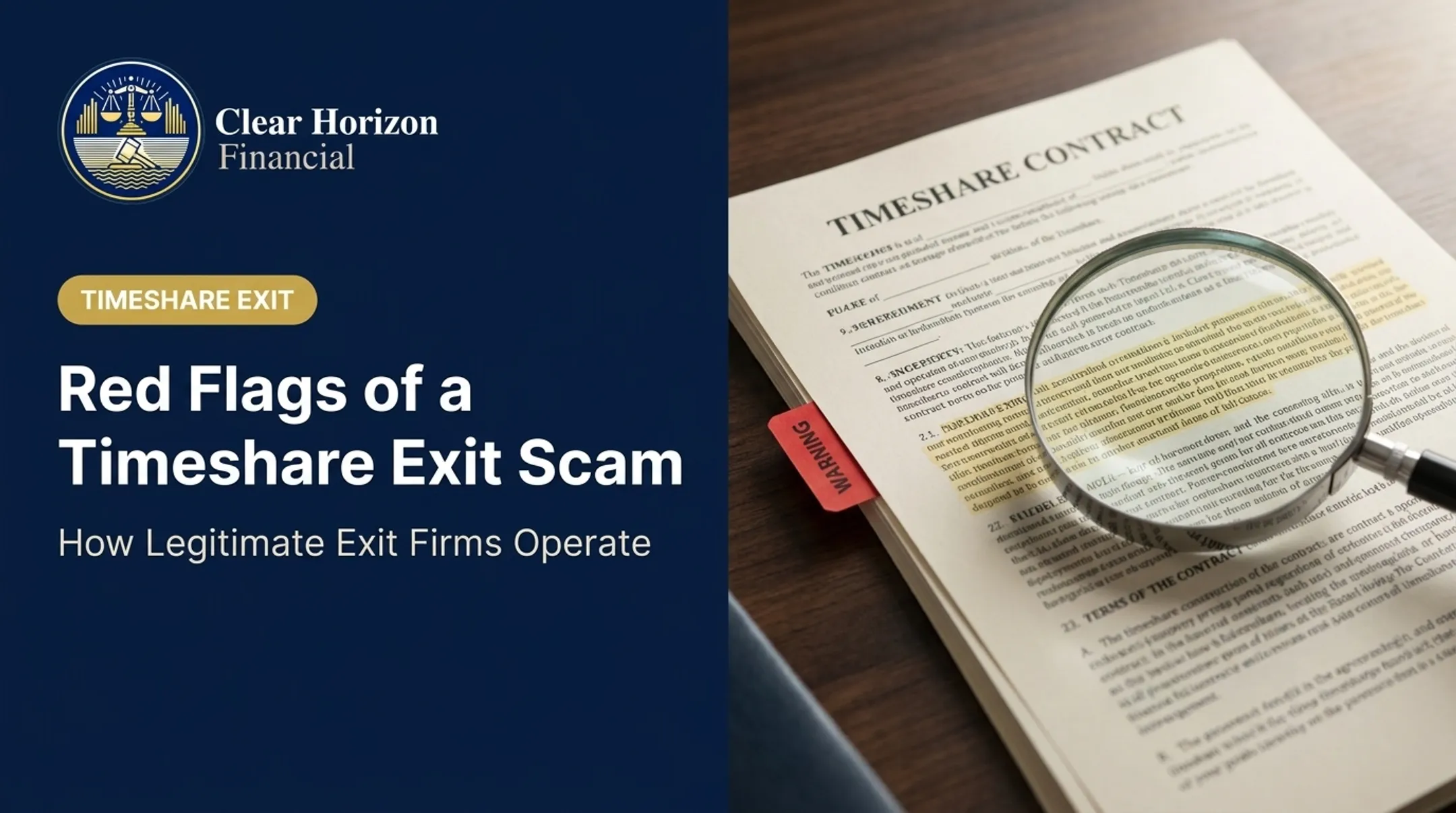
Some signals should stop you before you sign anything:
- Pressure to sign within 24 to 48 hours
- Guaranteed cancellation before anyone has reviewed your documents
- Unusually short, fixed timelines
- Vague or shifting pricing
- Claims of legal authority the company can't substantiate
- Instructions to ignore official resort or lender notices
Minnesota's attorney general specifically flagged high-pressure sales tactics and large upfront payments among the practices behind its 2025 timeshare-exit consumer alert (Minnesota AG, 2025).
Before hiring anyone, complete this due diligence:
- Check independent reviews, BBB records, and state business registrations
- Look for complaint patterns, not just polished testimonials
- Get an independent attorney's second opinion when a loan, credit risk, or possible fraud claim is involved
How Clear Horizon Financial Can Help
Clear Horizon Financial is a U.S.-based timeshare exit company built around individualized case management and documentation-focused support. Not every owner qualifies for the same strategy, and a real contract review always comes before any strategy is proposed.
The company reports more than 25 years of combined industry experience, has worked with more than 1,500 families, and cites a 98% success rate.

These are company-reported figures. It's fair to ask any provider, including this one, how success is defined, what period the number covers, and whether documentation backs it up.
What's typically included:
- AI-powered deed and contract analysis that scores your agreement and flags perpetuity clauses, fee escalations, and misrepresentation indicators
- Formal cancellation filings and regulatory complaints, sent by certified mail where appropriate
- A dedicated senior case manager assigned to your file
- A private client portal showing real-time case progress, messages, and documents
- Written confirmation from the resort once an exit is completed
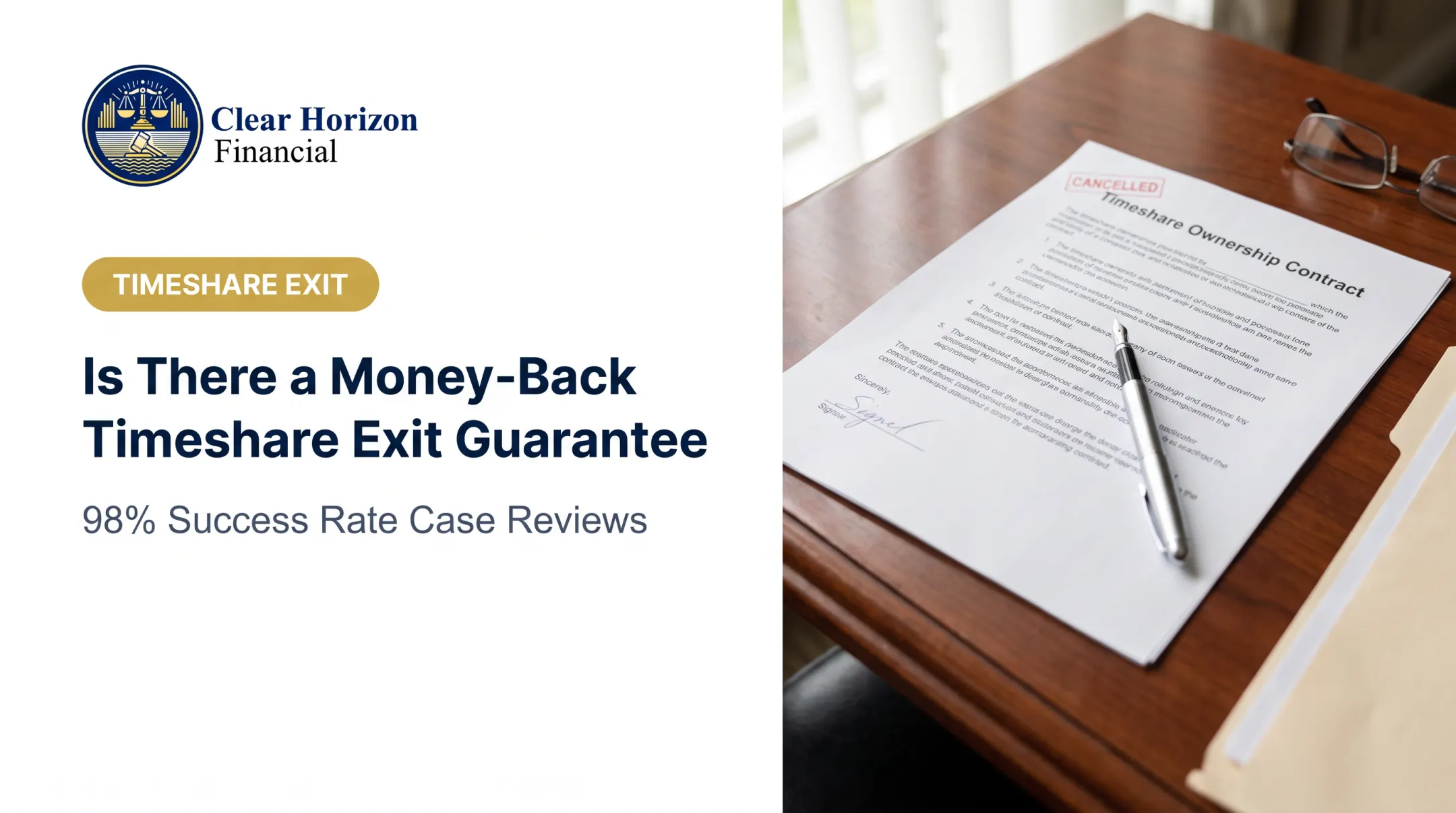
- A written money-back guarantee if the exit is not completed successfully
Trust signals worth checking yourself:
- BBB accreditation with an A+ rating, held for 11 years
- Case work involving brands including Wyndham, Westgate, Marriott, and Diamond
- Documented exits backed by written resort confirmation
Verify any company's current credentials, and read the written agreement in full before signing.
If you're weighing your options, request a consultation and have your contract details ready. Compare the answers, fees, guarantee terms, and documentation standards against the checklist above, for this company or any other you're considering.
Conclusion
Choose a timeshare exit company that explains its process, costs, risks, responsibilities, and final documentation in plain writing. A fast promise or smooth sales pitch is not enough.
Before you hire anyone, compare written answers side by side. Check independent reputation signals. Understand exactly how the process could affect your payments and credit. Never sign under pressure to decide immediately.
Your next step is to gather:
- Timeshare contract and deed
- Loan information and maintenance-fee records
- Resort correspondence
- Any evidence of alleged misrepresentation
With those documents in hand, request a review and ask the questions that protect your payments, credit, and exit outcome.
Frequently Asked Questions
How difficult is it to get out of a timeshare contract?
Difficulty depends on your contract terms, rescission period, resort, loan balance, maintenance-fee status, governing law, and available evidence. Review your agreement and ask any provider for a written, situation-specific assessment.
How much does a timeshare exit company cost?
Pricing varies significantly by provider and case complexity, with upfront fees reported anywhere from roughly $1,500 to $15,000 or more. Request an itemized written quote covering all fees, third-party costs, and guarantee conditions before paying anything.
How long does it take to exit a timeshare through a company?
Timelines vary based on resort response times, contract type, loan or fee status, documentation, and your desired outcome. Be cautious of any guaranteed deadline offered before a company has reviewed your contract.
How can I tell if a timeshare exit company is legitimate?
Verify business credentials, independent complaints, and reviews through sources like the BBB and your state attorney general's office. Ask for written service terms, fee disclosures, a defined outcome, and documentation of completed exits.
Can a timeshare exit company guarantee I'll be released from my contract?
Scrutinize any guarantee closely, including its definition of success, exclusions, deadlines, and refund process. A meaningful guarantee only comes after the company has actually reviewed your documents, not before.
Will hiring a timeshare exit company affect my credit?
Credit effects depend on your payment history, loan and maintenance-fee status, any collections activity, and the actions taken during your exit. Don't stop payments or ignore notices without understanding the consequences first.