
This article covers the federal tax questions that follow a timeshare exit, whether that exit happens through a deed-back, foreclosure, resale, or forgiven debt. It does not cover state tax rules, which vary.
Tax treatment depends on your ownership structure, how you financed the purchase, what your exit documents say, and your personal financial situation. Nothing here replaces advice from a CPA or tax attorney who can review your specific paperwork.
Key Takeaways
- Canceling a timeshare doesn't automatically create taxable income, but forgiven or discharged debt might
- A Form 1099-C or 1099-A isn't the final word; a tax professional needs to review the underlying transaction
- Maintenance fees and resale losses are treated differently than property taxes or secured mortgage interest
- Stopping payments can trigger collections, foreclosure, credit damage, and tax reporting all at once
How the IRS May View a Timeshare Before and After Cancellation
Not every timeshare is the same in the eyes of the IRS, and the structure you own affects what happens at tax time.
Deeded, Right-to-Use, or Points-Based: Why the Structure Matters
Timeshare structures fall into a few common buckets:
- Deeded: A fractional interest in real property, similar to owning a slice of a house
- Right-to-use: A contractual lease for a set number of years with no deed
- Points-based: Access to a pool of inventory rather than a specific week; the underlying interest may be deeded or contractual depending on the program
That distinction matters. Deductions tied to real property, such as mortgage interest, generally require an actual ownership interest secured by that property. A right-to-use contract or an unsecured points membership typically doesn't qualify.
Personal Use vs. Investment: The Default Classification
Most owners use their timeshare for vacations, not as a rental business. The IRS treats that as personal-use property. That classification matters for two reasons:
- Losses on the sale of personal-use property generally aren't deductible
- An owner can't treat a timeshare purchase as an investment loss just because it sold for far less than they paid
Personal-use treatment also shapes how ongoing costs and exit-related debt show up at tax time. Items that often get sorted differently—sometimes in the same exit—include:
- Maintenance fees and special assessments
- Property taxes and loan interest
- Resale proceeds
- A canceled or forgiven loan balance
A quick example: An owner pays $1,200 a year in maintenance fees (a personal expense, not deductible) and still owes $8,000 on the purchase loan. If the resort forgives that $8,000 as part of an exit, the forgiven balance is a separate event from the fees and may be reportable as income. Figures are illustrative only.

What Form 1099-C or Form 1099-A Could Mean After a Timeshare Exit
If a resort, lender, or timeshare-related creditor is involved in your exit, one of these two forms may follow—and a copy typically goes to the IRS.
Why You Might Receive One
- Form 1099-A is filed when a lender acquires an interest in property securing a debt, or has reason to know the property was abandoned.
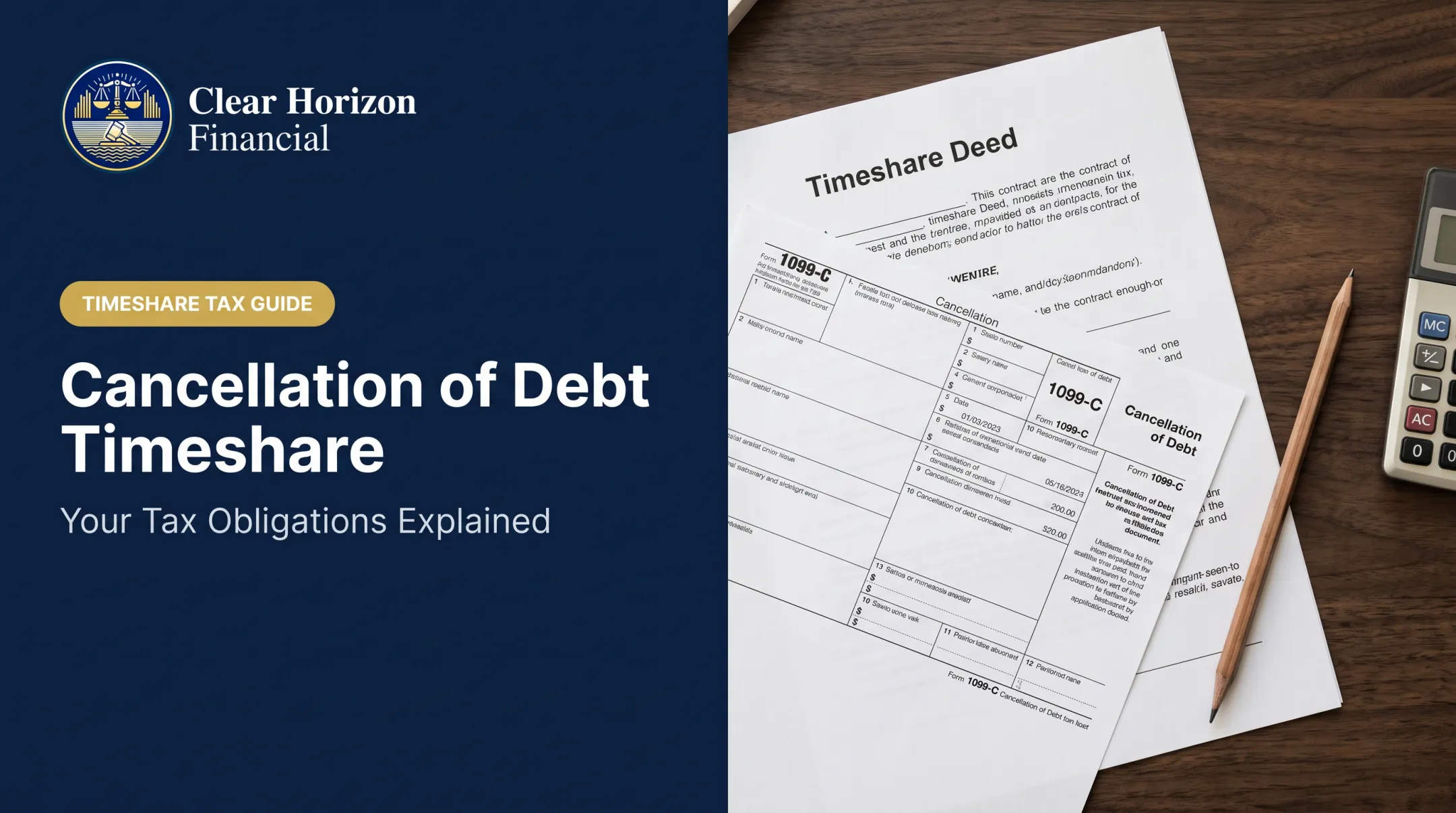
- Form 1099-C is filed when an applicable creditor cancels $600 or more of debt tied to an identifiable event, like a settlement or deed-back.
If both an acquisition and a cancellation happen in the same year, a single properly completed 1099-C can cover both.
What's Actually on the Form
A 1099-A typically reports:
- Acquisition or abandonment date
- Outstanding loan principal
- Property's reported fair market value
A 1099-C typically reports:
- Identifiable-event date
- Canceled amount
- Whether interest is included
- Whether you were personally liable for the debt
Under federal law, canceled debt generally counts as gross income in the year it's forgiven unless an exception or exclusion applies, per IRS Tax Topic 431. Receiving the form doesn't settle the question. It just starts it.
The Insolvency and Bankruptcy Exclusions
Two common exclusions apply:
- Insolvency — available when your liabilities exceeded the fair market value of your assets immediately before the debt was discharged
- Bankruptcy — available when the debt was discharged in a Title 11 case under court jurisdiction
If either applies, attach Form 982 to your return to claim the exclusion and reduce certain tax attributes. Never file this form automatically. Whether you qualify—and how much you can exclude—depends on facts a tax professional needs to verify.

Document Checklist
Before meeting with a tax professional, gather:
- Original purchase contract and loan documents
- Settlement, cancellation, or deed-back agreement
- Foreclosure records, if applicable
- Every 1099 form received
- Payment history
- Fair-market-value information for the timeshare
- Records supporting insolvency or bankruptcy, if relevant
Tax Treatment of Common Timeshare Ownership and Exit Situations
Owners often treat every timeshare cost the same at tax time. Under federal rules, maintenance fees, mortgage interest, resale results, and exit costs each follow a different path.
Maintenance Fees, Assessments, and Property Taxes
Annual maintenance fees, which typically run $1,000 to $1,500 and climb almost every year, are not deductible as real estate taxes. Special assessments, which can add hundreds or thousands of dollars overnight, get the same treatment. A government-imposed property tax based on the timeshare's value may be itemized if it meets standard IRS rules.
Mortgage Interest: Secured vs. Unsecured Debt
Interest may be deductible if the timeshare is deeded, qualifies as a second home, and the loan is secured by that specific property. IRS Publication 936 outlines the requirements for home mortgage interest, including ownership interest, secured debt, and itemized deductions with applicable limits.
Developer financing is a different story. Many timeshare loans carry interest rates of 14% to 18% and aren't secured the way a mortgage is. Interest on that kind of unsecured personal loan generally doesn't qualify for the mortgage interest deduction, even though the loan was used to buy the timeshare.
Selling, Renting, or Walking Away
- Resale losses: Personal-use timeshares routinely resell for $1 on secondary markets, and some owners pay closing costs just to find a taker. That loss isn't deductible because the property was held for personal use, not investment.
- Resale gains: A gain, while less common, generally needs to be reported.
- Rental income: If you rent out your week, income is generally reportable once you exceed 14 rental days, and expense deductions depend on how your personal-use days compare to rental days.
- Exit costs: Fees paid to cancel a personal-use timeshare are personal expenses and usually nondeductible. Debt forgiven in an exit can create taxable cancellation-of-debt income, so confirm treatment with a tax professional.

Why Stopping Payments or Abandoning a Timeshare Can Change the Tax Picture
Walking away from the bill isn't the same as legally canceling the contract, and the gap between those two things can get expensive.
Missed payments typically lead to late fees, collections calls, liens, and eventually foreclosure. Once that happens, two separate calculations can kick in:
- A gain or loss based on the property's value
- Potentially ordinary income tied to any debt that gets canceled
Whether that debt is recourse (you're personally liable) or nonrecourse (the lender's claim is limited to the property) changes how those numbers work.
Credit damage, deficiency liability, and tax reporting are three separate problems. Fixing one doesn't fix the others. Foreclosure can stay on a credit report for seven years, according to the Consumer Financial Protection Bureau, and that timeline runs independently of whatever happens on your tax return.
Never rely on a verbal promise from a resort, lender, or exit company. Get the ownership release, remaining balance, and expected tax forms in writing.
Watch for these warning signs:
- Promises of "no taxes owed" before anyone reviews your file
- Guaranteed deductions or guaranteed IRS outcomes
- Pressure to sign within 24 to 48 hours
- Large upfront fees (some exit companies charge $1,500 to $15,000 or more) with no written escrow protection
What to Do After Cancelling a Timeshare or Receiving a Tax Form
Start with paperwork. Build one file containing:
- Purchase contract, deed, or membership agreement
- Loan documents and payment history
- Cancellation or settlement paperwork
- Resort correspondence and the final release
- Every tax form you received
Then bring that file to a CPA, enrolled agent, or tax attorney. Ask directly:
- How should this transaction be reported?
- Does an exclusion, like insolvency or bankruptcy, apply?
- Do I need to amend a prior return?
If a 1099 doesn't match your own records, request a correction from the issuer before filing anything.
An exit service can help organize the moving pieces. At Clear Horizon Financial, case files are tracked through a client portal that logs every document sent, every resort response, and USPS tracking on certified mailings. Owners then have a documented history if tax questions come up later. That kind of record-keeping supports a tax review; it doesn't replace one.
Before you sign an exit agreement, stop making payments, or assume you know how a form will be taxed, get the financial and tax consequences reviewed first. That order matters more than the timeline.
Frequently Asked Questions
Do I owe taxes after canceling a timeshare?
Not automatically. Cancellation alone doesn't create a tax bill, but forgiven debt, a sale, foreclosure, or another transfer connected to the exit might. Review your specific paperwork with a qualified tax professional.
How does a 1099-C from timeshare debt cancellation affect my taxes?
It reports potentially canceled debt to you and the IRS, but exclusions like insolvency or bankruptcy may apply. Verify the form's accuracy and review Form 982 eligibility with a tax professional before filing.
Do I have to pay property or income taxes on a timeshare?
Property taxes assessed by a local authority are separate from income taxes tied to rental income, resale gains, or canceled debt. Which ones apply depends on how you own and use the timeshare.
Can I cancel my timeshare after the rescission period and get a refund?
Rescission windows are short and vary by state, often just days. After that period, cancellation or a refund typically requires a contractual, statutory, or negotiated basis, so review your documents promptly.
What happens if I stop paying or abandon my timeshare?
You risk collections, credit damage, liens, foreclosure, deficiency liability, and possible tax reporting on any canceled debt. Stopping payments is not a substitute for a documented cancellation.